
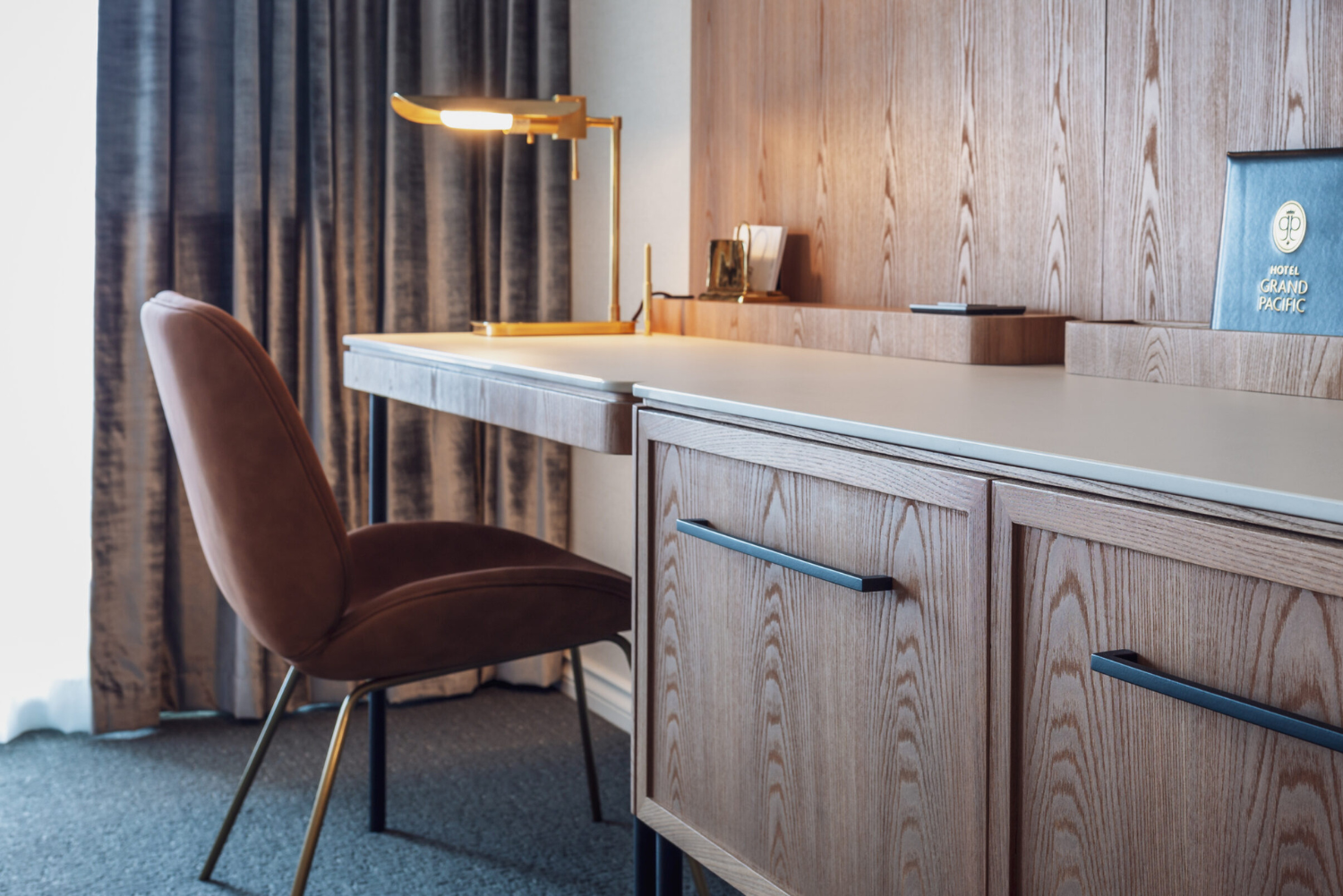
This guide provides essential care and maintenance instructions for commercial hospitality furniture to maximize its lifespan and durability.
Maintaining commercial furnishings is one of the most direct ways to preserve property presentation, protect brand standards, and extend replacement cycles. High guest traffic, accidental spills, and daily room turnover place substantial demands on contract furniture.
Implementing a structured maintenance routine ensures your investment retains its structural integrity and aesthetic appeal across high-traffic environments. This comprehensive care guide breaks down essential protocols for preserving wood, laminate, upholstery, metal, and stone surfaces.

4 Core Rules of Commercial Furniture Maintenance
Before applying material-specific cleaners, integrate these four foundational operational rules into your housekeeping and engineering protocols:
Blot Spills Immediately: Act quickly when liquids hit any commercial surface. Blotting prevents moisture from penetrating wood grain, fabric fibers, or porous stone. Never rub, as rubbing forces stains deeper into the material.
Spot-Test New Cleaning Solutions: Always test specialized cleaners on an inconspicuous area before performing a broad application.
Eliminate Harsh Chemicals: Avoid abrasive pads, bleach, ammonia, and unapproved commercial solvents across all contract surfaces.
Lift, Never Drag: Instruct staff to lift furniture when clearing rooms or reconfiguring layouts. Dragging or pulling pieces by their arms, seat backs, or table edges places severe stress on structural joinery.
Material-Specific Care & Cleaning Protocols
Solid Wood & Wood Veneers
Solid wood frames and fine wood veneers offer classic elegance but require strict moisture management to prevent finish wear and joint stress.
- Routine Dusting: Wipe surfaces regularly with a clean microfiber cloth, moving in the direction of the wood grain.
- Routine Cleaning: Dampen a cloth with mild soap and water, wipe down the surface, and dry immediately with a clean towel. Never allow moisture to collect along seams, joints, or exposed edges.
- Protective Measures: Avoid silicone-based polishes, waxes, and generic commercial sprays. Use protective coasters or pads beneath hot, wet, or abrasive items.
High-Pressure Laminate (HPL)
High-Pressure Laminate provides exceptional scratch and impact resistance for guestroom work desks, nightstands, and dining tops.
- Standard Cleaning: Wash using a soft cloth, mild soap, and warm water. Remove remaining soap residue and dry thoroughly.
- Damage Prevention: Skip scouring pads, powdered abrasives, and sharp tools. Prevent standing water from resting along edge banding or exposed seam lines.
Commercial Upholstery & Contract Fabrics
Extending the lifespan of upholstered seating depends on routine preventive maintenance and adhering strictly to fabric cleaning codes.
- Vacuuming Schedule: Vacuum upholstered seating regularly using a clean commercial upholstery attachment. Pay extra attention to seams, crevices, and areas beneath loose cushions.
- Spill Protocol: Blot liquid spills from the outer edge toward the center using an absorbent white cloth to prevent ring marks. Never scrub aggressively or use direct heat to speed up drying.
- Understanding Upholstery Cleaning Codes: Always check the manufacturer’s code before applying any liquid cleaner:
- W (Water-based): Safe for water-based cleaning agents.
- S (Solvent-based): Safe for mild water-free dry-cleaning solvents only.
- WS (Water/Solvent): Compatible with both water-based and solvent-based cleaners.
- X (Vacuum Only): Clean strictly by vacuuming or light brushing; do not use liquid cleaners.
MicroFiber & Genuine Leather Upholstery
Alternative synthetic leathers and genuine leather require distinct maintenance routines to prevent surface drying and cracking.
- MicroFiber Synthetic Leather: Wipe down using a soft cloth dampened with mild soap and water, then dry. Use only disinfectant solutions explicitly verified for compatibility by the synthetic leather manufacturer.
- Genuine Leather: Dust regularly with a soft, dry cloth. Clean exclusively with products formulated for the specific leather type. Keep leather furniture away from direct sunlight and radiant heating sources to prevent fading and premature cracking.
Metal, Quartz & Natural Stone Countertops
Hard surfaces and architectural accents require targeted care to keep factory sealants and metal finishes intact.
- Coated Metal Frames: Clean powder-coated or finished metal components using a soft damp cloth and mild soap, then dry completely. Avoid acidic, chlorine-based, or abrasive cleaners.
- Quartz Surfaces: Clean with mild dish soap and warm water. Use trivets or heat pads under high-temperature appliances.
- Natural Stone: Clean exclusively with pH-neutral stone care products. Avoid household vinegar, citrus cleaners, acidic chemicals, and abrasive scouring pads that dull and etch natural stone sealers.


